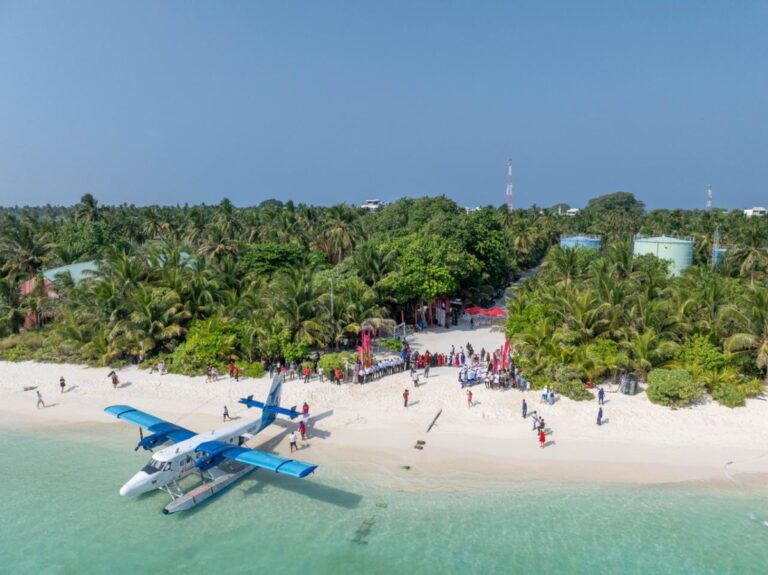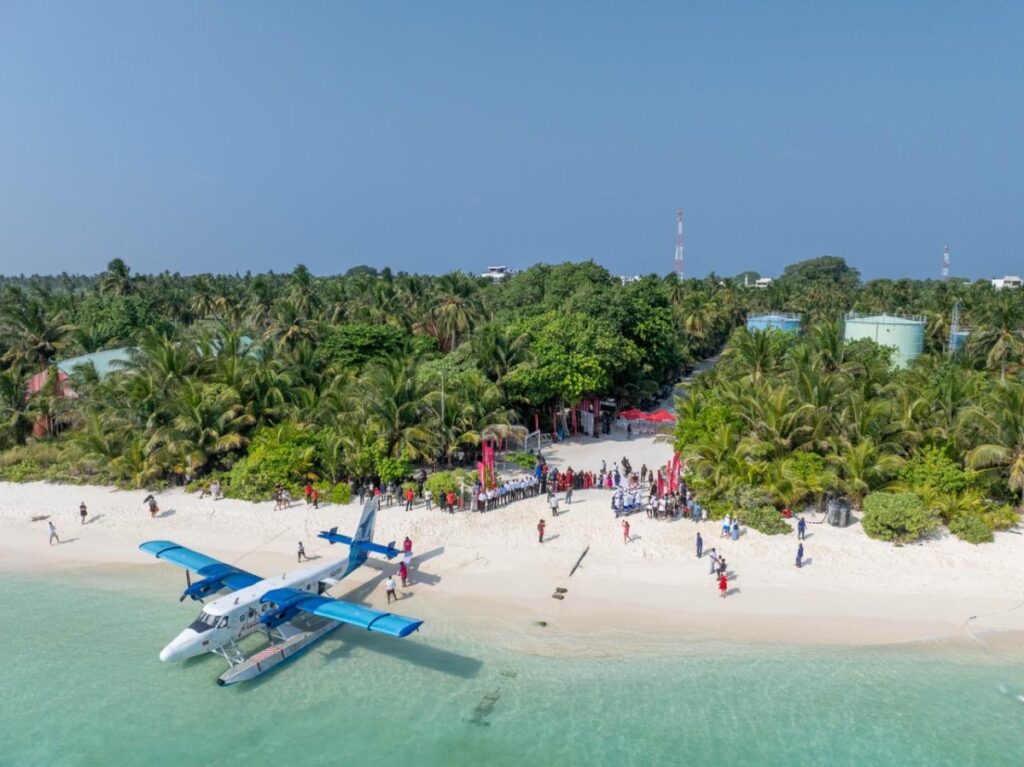
The launch comes in response to increased demand from tourists for faster access
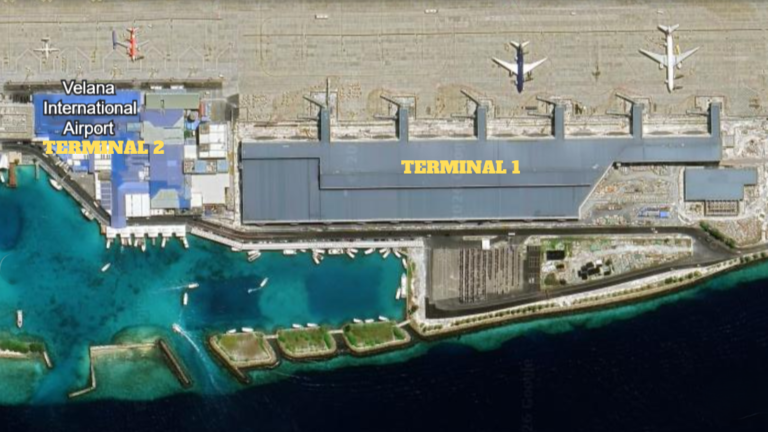
On February 12th, Maldivian launched its first scheduled seaplane service to the inhabited island of Thoddoo in North Ari Atoll. The national airline said the route is intended to improve travel convenience while supporting the development of local tourism. Flights will depart from the Maldivian Seaplane Terminal (near Velana International Airport, on Hulhule island) every Thursday and Saturday.
As of February 13th, it’s still not possible for guests to book Thoddoo flights directly through the Maldivian website. So, asking a guesthouse (hotel) in Thoddoo or a local travel agent is currently the best way to arrange transfers to the island.
The flight time is just 20 minutes. Previously, it took 60-90 minutes by speedboat, or four to five hours by public ferry, depending on sea and weather conditions (see our Maldives public ferry guide).
Normally, seaplane companies in the Maldives only fly to resorts (private tourist-only islands with no towns or villages). But the commencement of scheduled seaplane flights to Thoddoo marks a new commitment from Maldivian to broaden domestic connectivity to up-and-coming tourist destinations.
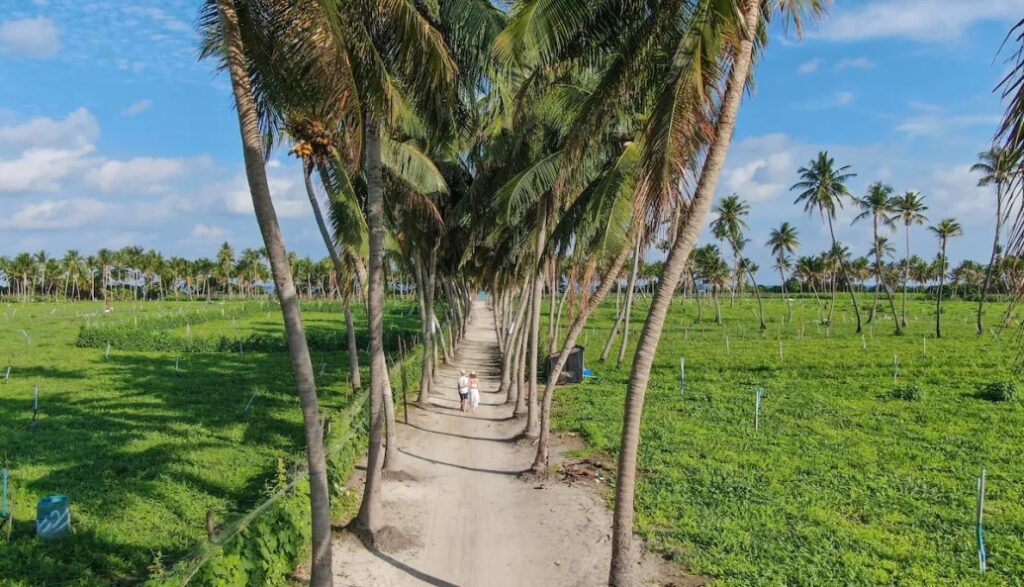
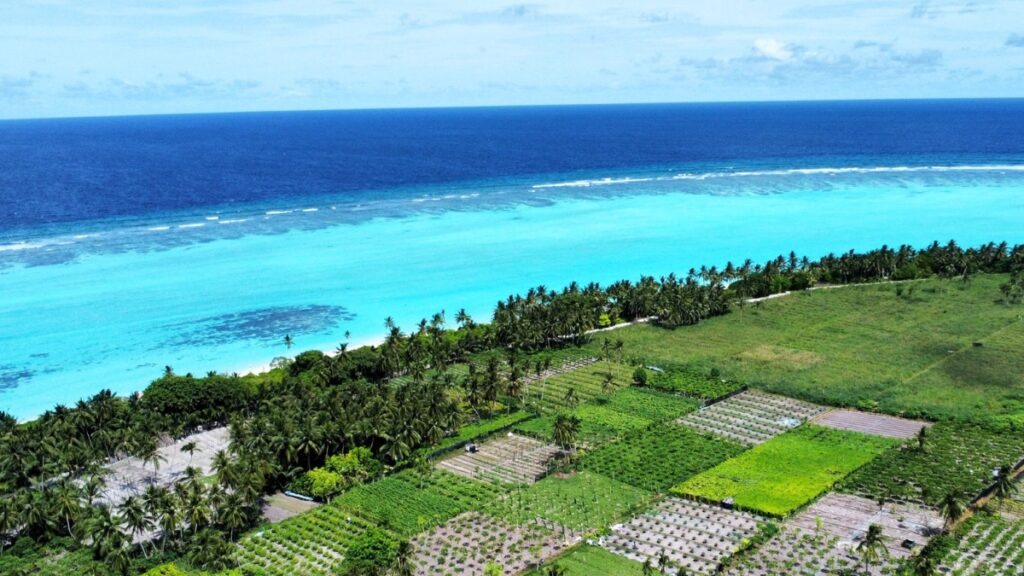
Thoddoo is a particularly lush inhabited island. One-third of the landmass is dedicated to 112 farms. In fact, until recently, it was best known as an agricultural island. A harvest on Thoddoo can yield over 200 tonnes of watermelons.
You can visit many of the watermelon fields as well as papaya, banana and passionfruit plantations. This novel experience, along with the island’s white sand beaches, is proving increasingly popular with tourists.
Thoddoo and other ‘local islands’
Islands in the Maldives are classified according to their purpose, and there are specific laws applying to the different types of islands. The ones like Thoddoo (where Maldivians live and work) are known as ‘local islands’, ‘inhabited islands’ or ‘guesthouse islands’.
The accommodation on ‘local islands’ also has its own unique classification system: whatever it looks like, it’s always officially called a ‘guesthouse’. But in reality, a ‘guesthouse’ in the Maldives can look like anything – from a very basic room to a chic boutique hotel.
Typically, prices of guesthouses across the Maldives range from around $50-150 per night. While that’s expensive for the region, it’s considerably cheaper than a three or four-star resort. And you still get to experience the sunshine, turquoise water, and white sand that the Maldives is famous for.
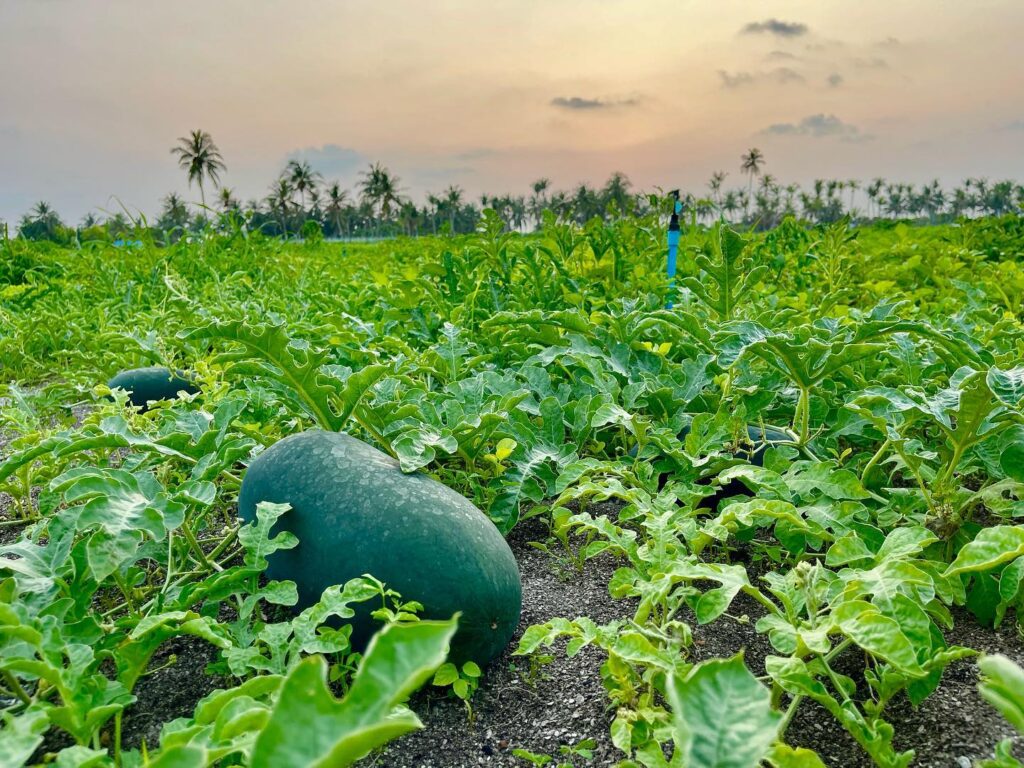
In addition, if you choose a particularly unique ‘local island’ like Thoddoo, you also get to see what farms look like on a remote island in the middle of the Indian Ocean.
However, the ‘local island experience’ doesn’t come without its caveats. Alcohol and skimpy swimwear (bikinis) are illegal on all ‘local islands’. Visitors are encouraged to ‘dress modestly’ to avoid offending the residents, who are Sunni Muslim.
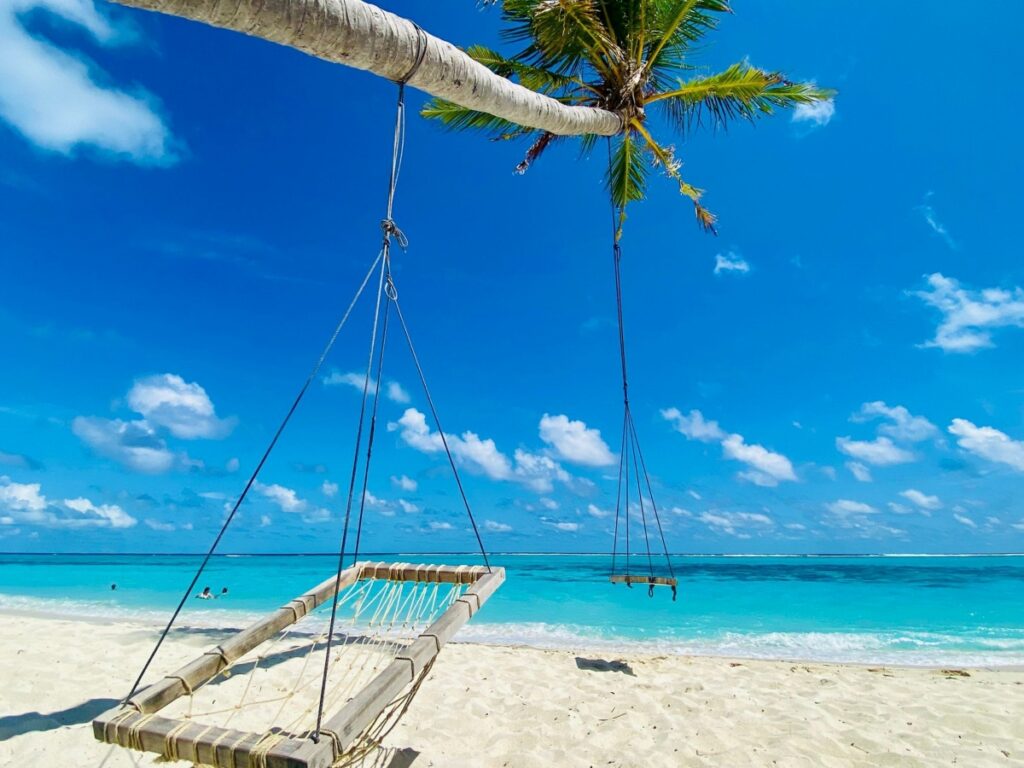
But some ‘inhabited islands’ popular with tourists do have what’s known locally as a ‘bikini beach‘ – Thoddoo has two. These are private areas of the beach where tourists can sunbathe and wear whatever swimwear they want. On the rest of the ‘local island’ beaches, we recommend women wear a rash shirt and board shorts to cover up a little.
A few islands, such as Maafushi and Dhiffushi, also have ‘floating bars’ (boats) moored nearby that sell alcohol to travellers. Despite these important local laws, many tourists relish the opportunity to visit the ‘real Maldives’, mix with everyday Maldivians, learn about their traditions, and maybe even enjoy the ‘sober tourism‘ trend.
The laws regarding bikinis and alcohol do not apply to ‘resort islands’.
You may also be interested in: What to expect at Velana International Airport’s new Terminal 1
About the Author